Musicality · Clave
Son clave vs rumba clave: how to hear the difference
Five hits. A half-beat difference that changes everything.
Four of the five hits are identical in son clave and rumba clave. That makes each pattern easy to memorize on its own, but the difference between them easy to miss. In the trainer, both versions begin with the same half of the eight-count: you can hear them separately or play them together and see the exact point where they diverge.
Hear the difference
Four clave versions in one eight-count
Choose a pattern
You can tap each of the four versions separately. In both directions—2–3 and 3–2—you can also play Son and rumba together on two separate tracks.
The final hit moves from 8 to the “and” after 8. Less time remains before the next 1, so the pattern begins to move differently. In rumba clave, the end of the phrase pulls more strongly toward the beginning of the next eight-count. This short shift changes its internal tension.
One of the five hits moves to the “and”
What does “clave” actually mean?
Claves are two wooden sticks struck against each other. The same word also names the rhythmic pattern around which musicians organize their parts.
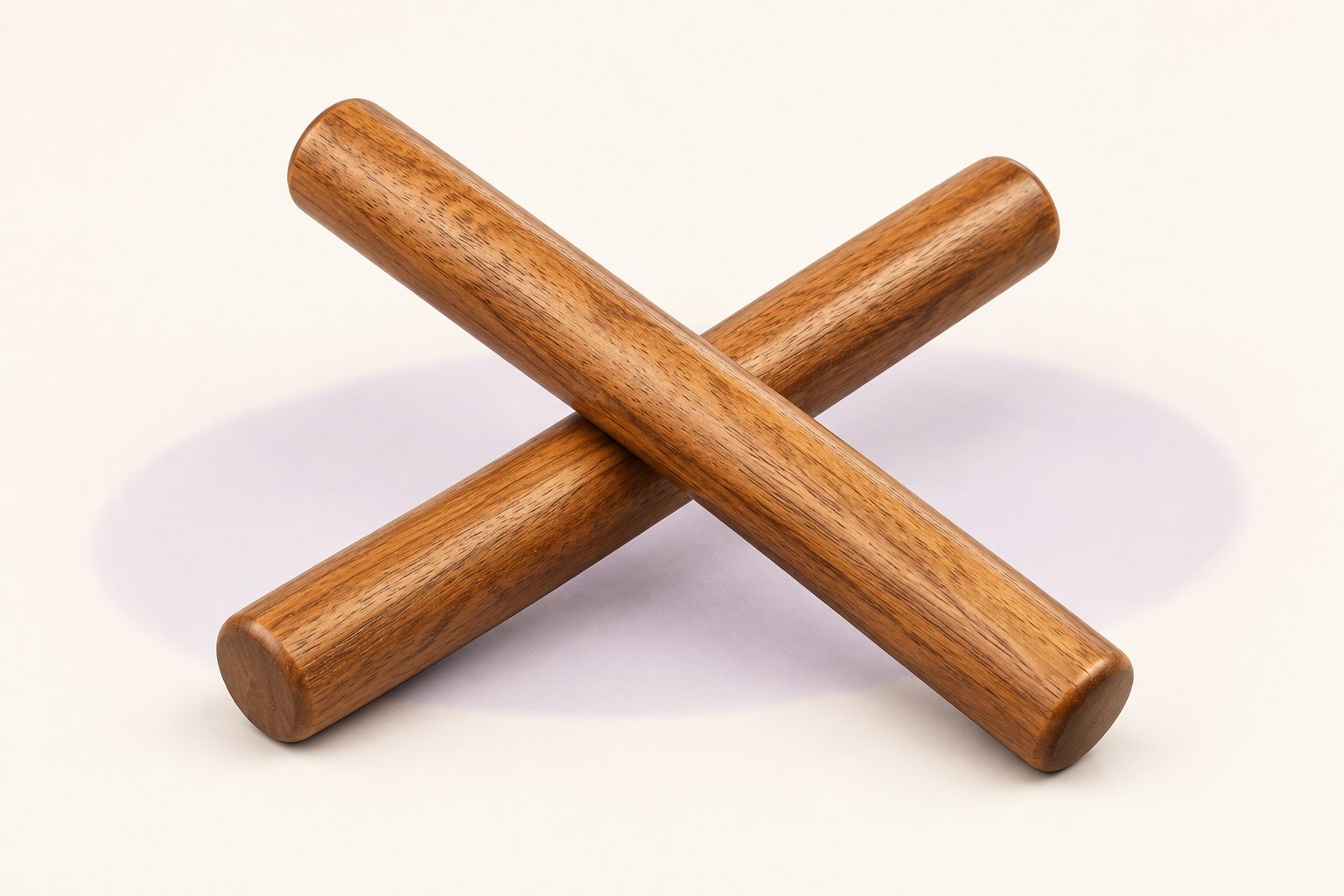
Different patterns can be played on claves, with different numbers of hits and different placements against the count 1, 2, 3, 4, 5, 6, 7, 8. One of the main distinctions worth hearing in Cuban music is the difference between son clave and rumba clave. Both patterns contain five hits inside one dancer’s eight-count.
In timba, the literal clave pattern is often played by the pailero, or timbalero, on a jam block—a wooden or plastic block mounted on the setup. But the five separate hits may not sound at all: the other parts still relate to clave, and the musicians keep it internally. The cáscara played on the timbales shell and the campana patterns remain independent parts connected to clave, not replacements for it.
2–3 and 3–2 describe direction
Son or rumba tells us which pattern is sounding. 2–3 or 3–2 tells us which side of that pattern comes first inside the eight-count.
- 2–3: counts 1–4 contain two hits; counts 5–8 contain three.
- 3–2: counts 1–4 contain three hits; counts 5–8 contain two.
That gives us four versions: son clave 2–3, son clave 3–2, rumba clave 2–3, and rumba clave 3–2. Direction changes the point from which we begin hearing the repeating pattern. The son/rumba distinction itself stays the same: one hit is shifted to the “and.”
Two hits first
The first half of the eight-count has two hits; the second has three.
Three hits first
The first half of the eight-count has three hits; the second has two.
Why one shifted hit affects the whole ensemble
Parts in Cuban music do not simply stack on top of one another at random. Entrances, open tones, bass strokes, and rests occupy specific places in relation to clave. When one clave hit moves, the distances between reference points change, and so does the way the other parts lock together.
Dancers hear the result as a different movement through the phrase. Rumba clave does not add a sixth hit. It places the same familiar five differently, changing the way the ensemble builds and releases tension.
Next step
Hear clave inside the full rhythm section.
In the Cuban Rumba course, we study rumba clave together with conga parts, movement, and examples from salsa and timba.
The course starts on November 9. Access to the materials opens the same day.
Source
- Original material by Katerina Mik.